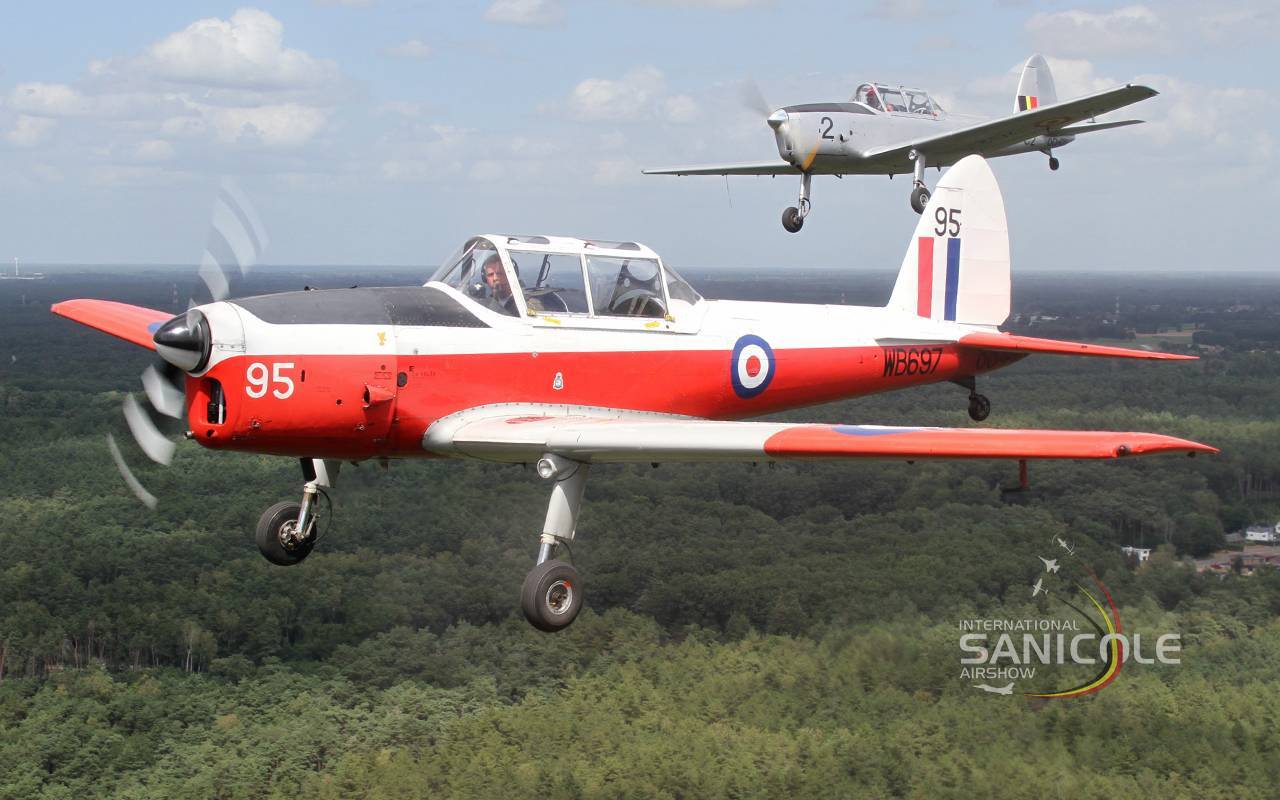
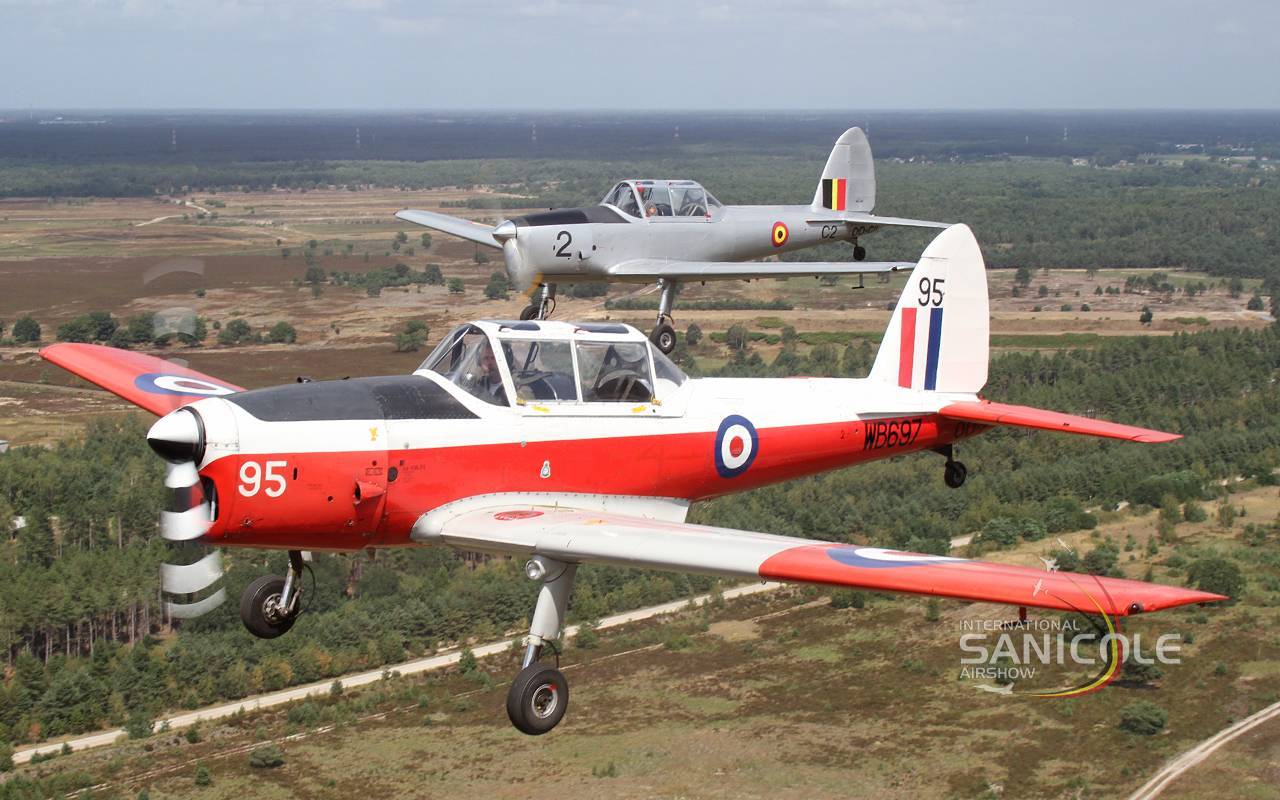
History will take to the skies over Sanicole as seven magnificent classic trainers arrive in formation for a truly unforgettable tribute to aviation heritage, celebrating the 80th anniversary of the type: DHC-1 Chipmunks.
Developed by de Havilland Canada in the years following the Second World War, the Chipmunk was designed as the modern successor to the legendary Tiger Moth. Making its maiden flight in 1946, this agile two-seat trainer quickly became the backbone of pilot training for air forces around the world, including the Royal Canadian Air Force and the Royal Air Force. Built in large numbers in both the United Kingdom and Portugal, generations of military aviators took their very first steps into the world of flight from the cockpit of a Chipmunk.
More than 70 years later, the distinctive rumble of the Chipmunk's engine still captivates aviation enthusiasts across the globe. Many found a second life in civilian hands, while a small number continue to serve as training aircraft with the Portuguese Air Force. Belgium, too, played a small part in the Chipmunk story, evaluating two examples as potential successors to the Tiger Moth before ultimately selecting the Stampe & Vertongen SV4.
At the International Sanicole Airshow 2026, seven beautifully restored Chipmunks, most adorned in authentic historic colour schemes, will paint the skies above Hechtel-Eksel, Belgium, in a spectacular formation display on Sunday 13 September. Elegant, nostalgic and increasingly rare, this gathering of seven "Chippies" promises to be one of the memorable sights of the show. Do not miss this unique opportunity to witness living aviation history in flight.